

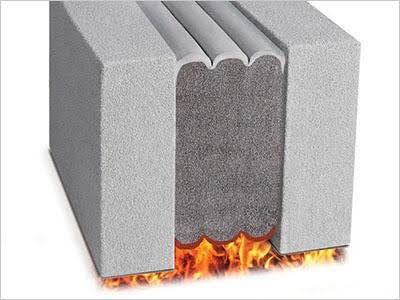
Fire-resistant joints are a critical component of passive fire protection (PFP) systems. Their function is to preserve the fire separation integrity of walls, floors and ceilings in locations where movement joints are required. These systems allow for building movement without compromising the Fire Resistance Level (FRL) of the barrier.
Why Fire-Resistant Joints Are Essential
Buildings naturally expand and contract over time due to temperature changes, wind loading, seismic activity and structural settlement. Without properly designed fire-resistant joints, these movements can form gaps in fire-rated barriers—potential pathways for fire and smoke to spread between compartments.
Types of Fire-Resistant Joints
- Linear Gap Seals – Used to seal continuous openings between building components.
- Expansion Joints – Designed for areas that experience significant structural movement.
- Perimeter Joints – Located between the edge of a floor slab and the external façade.
Standards and Compliance
In Australia, fire-resistant joint systems must be tested in accordance with AS 1530.4 and installed to the requirements of AS 4072.1. These standards define:
- Maximum allowable joint width and movement capability.
- Approved sealant types and application methods.
- Substrate compatibility requirements.
- FRL performance while under movement conditions.
Commonly Used Materials
- Intumescent sealants
- Mineral wool with fire-rated coatings
- Pre-formed compressible fire-rated foams
- Fire blankets or boards
Ceasefire PFP’s Approach
At Ceasefire PFP, we:
- Select systems that have been tested for the exact joint configuration and movement class.
- Ensure joints remain flexible without reducing FRL performance.
- Provide photographic records of the installation process.
- Collaborate closely with structural engineers to accommodate design movement tolerances.
Conclusion
Fire-resistant joints play an essential role in maintaining compartmentation within modern, dynamic building structures. Through careful system selection, compliant installation and coordination with engineering teams, Ceasefire PFP ensures that these joints deliver both fire performance and movement capability.