Australian passive fire services
Who We Are
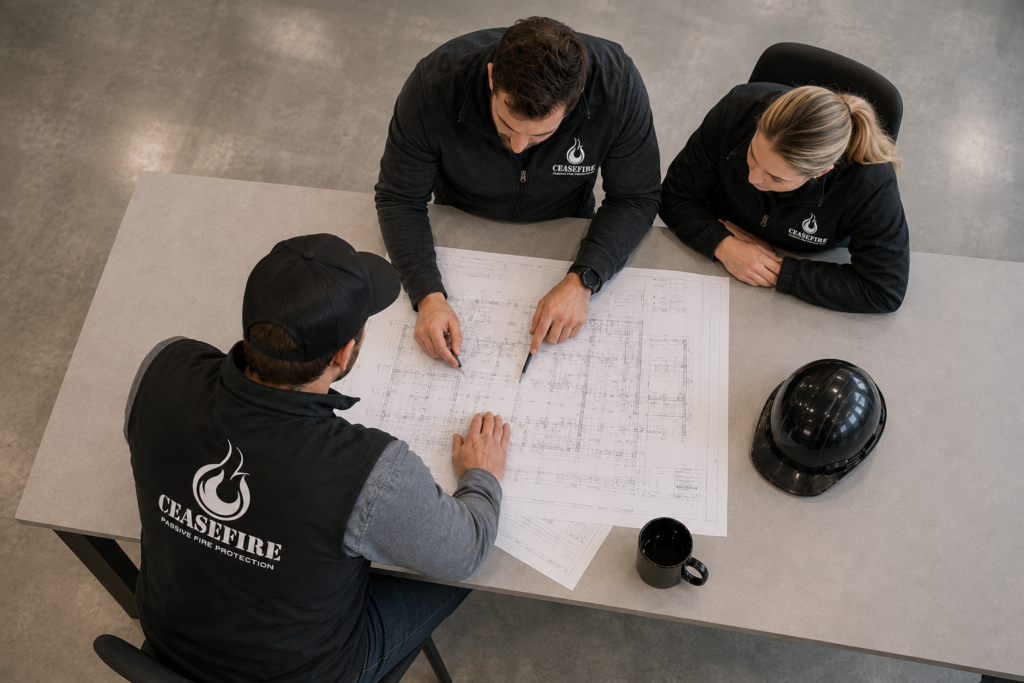
Ceasefire PFP is a leading Australian passive fire protection contractor, servicing NSW and the ACT. We deliver a comprehensive range of passive fire services across new construction projects, refurbishments, remedial works, and repairs.
We collaborate closely with trusted manufacturers and suppliers to ensure that all systems installed are fully tested and approved in accordance with the National Construction Code (NCC), formerly known as the Building Code of Australia (BCA).
All passive fire installations are carried out and certified to meet the relevant Australian Standards, including AS 1530.4 and AS 4072.1. Our team provides a complete end-to-end service, incorporating clear communication, efficient site coordination, compliant certification, and consistently high-quality workmanship.
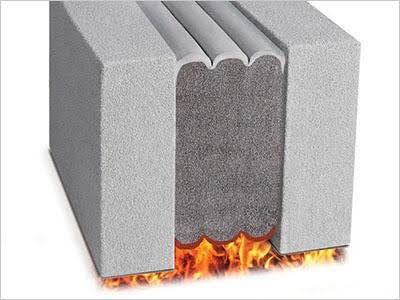
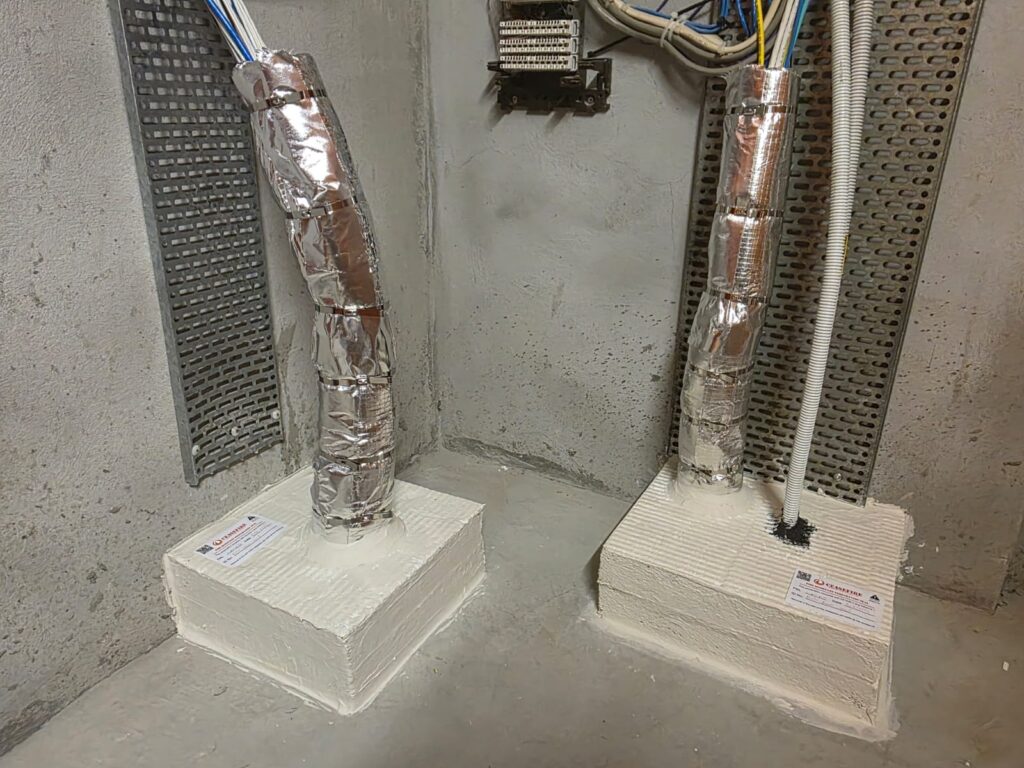
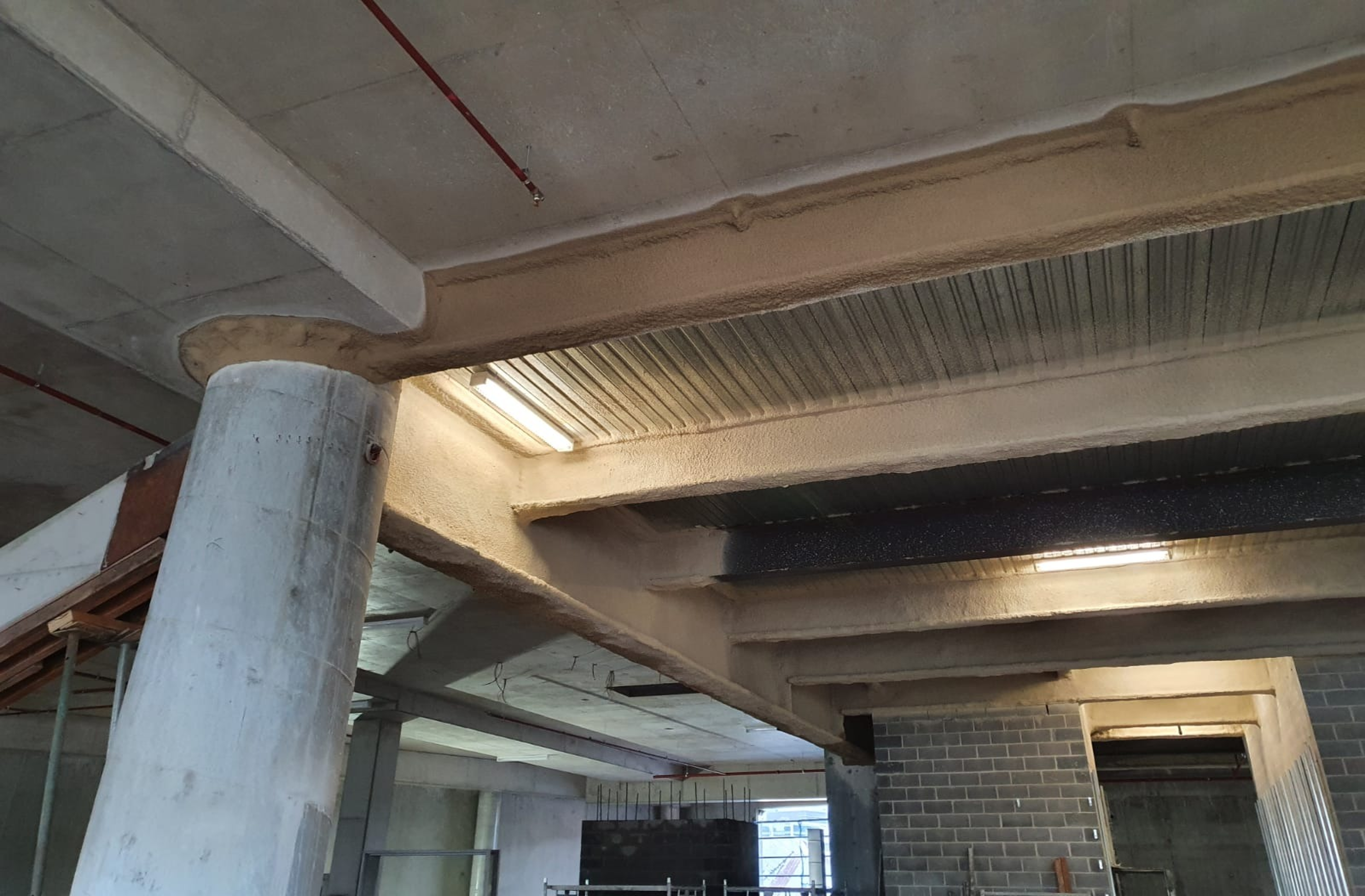
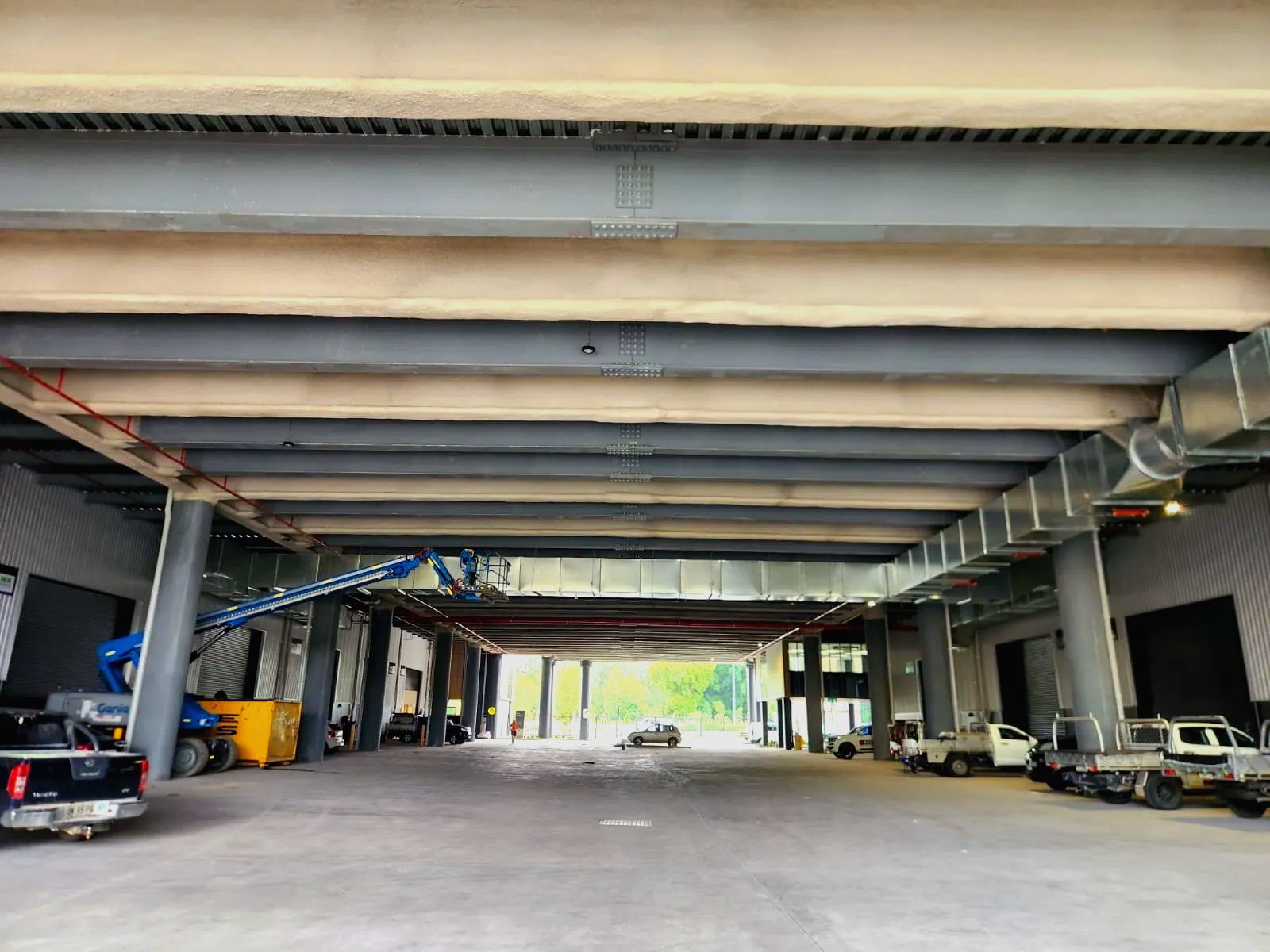
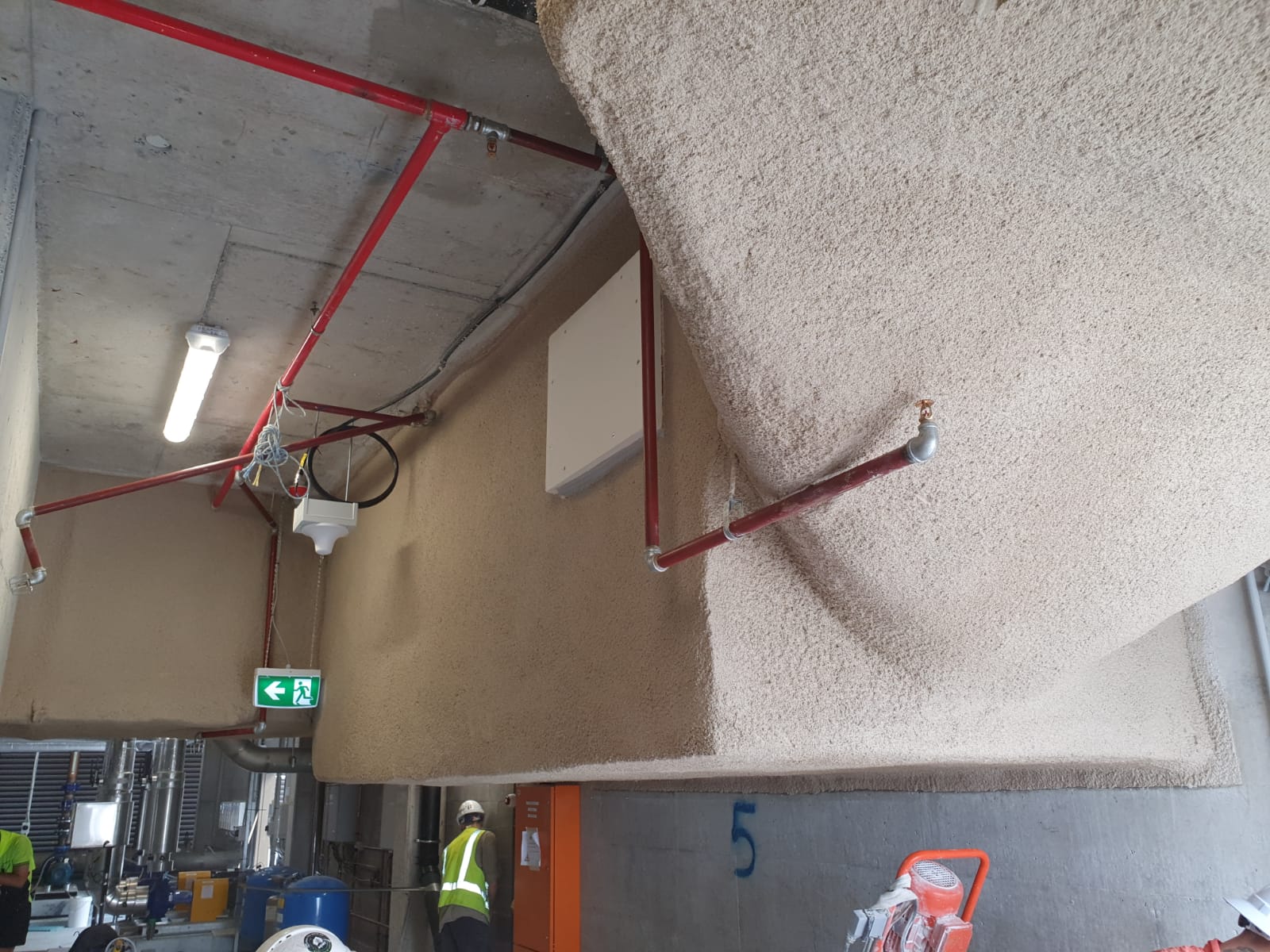
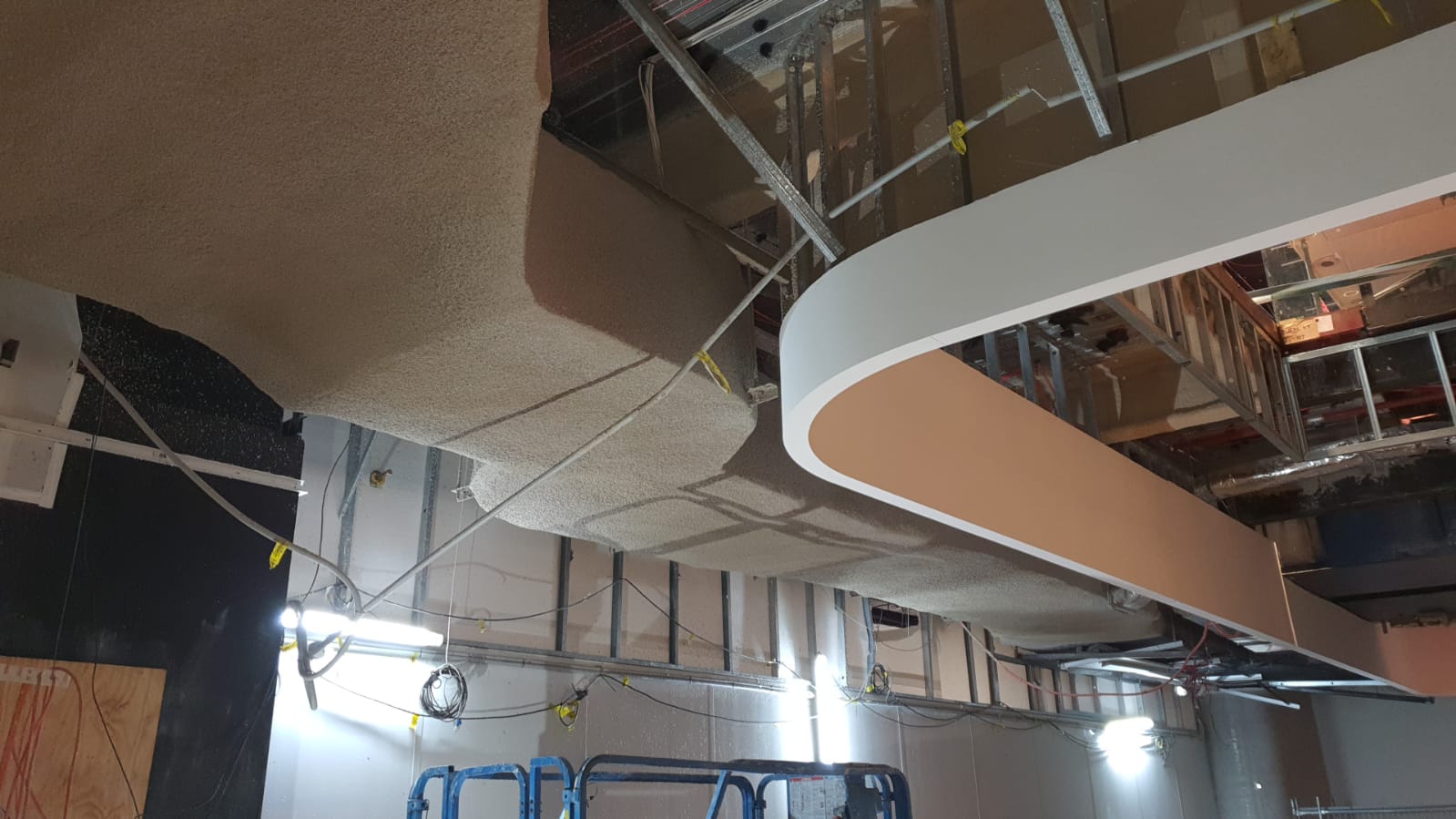
As industry-leading passive fire protection specialists, Ceasefire PFP delivers solutions including vermiculite spray applications, fire-rated penetration sealing, intumescent coatings, and a broad range of compliant fire protection systems.
Why Ceasefire?
Our expertise in passive fire protection encompasses a comprehensive understanding of fire safety principles, building codes, and industry standards. We specialize in the design, installation, and maintenance of passive fire systems, including fire-rated walls, doors, floors, and penetrations. Our team is trained to assess fire risks, develop tailored solutions, and ensure compliance with relevant regulations. With 20+ years of experience in the field, we are committed to providing reliable, cost- effective, and efficient passive fire protection solutions to safeguard lives and properties. All while delivering exceptional client service at every stage of the project.
Latest Projects
Our Projects and Achievements
The NSW government invested in the construction of a world-class sports stadium in Moore Park, next to the Sydney Cricket Ground.
The T1 Bifurcation redevelopment expanded the luxury retail space as part of a broader duty-free development at the Sydney International Airport.
The Lennox apartments are located in Parramatta near the historic Lennox Bridge and Church Street shopping precinct. It stands on the riverside as a new landmark for the emerging City…
Recent Articles
To learn more about passive fire protection, please see our articles which provide surrounding information about who we are and what we do.
Heritage buildings present a unique challenge for passive fire protection (PFP). While they must meet the requirements of the National
Hospitals are among the most complex and high-risk environments for fire safety. They contain vulnerable patients, critical medical equipment and
Data centres are the backbone of the digital economy. Any interruption caused by fire can result in major financial loss,
One of the biggest challenges in delivering compliant passive fire protection (PFP) is coordinating multiple trades on site. Plumbers, electricians,
Fire Compartmentation in Multi-Storey Buildings Fire compartmentation is a fundamental principle of passive fire protection. By dividing a building into
Fire-rated sealants are a key part of any passive fire strategy. They’re specifically designed to seal joints, gaps and service
Although they’re often installed in the same duct systems, fire dampers and smoke dampers serve very different purposes — and
Aged care facilities face unique fire safety challenges. Many residents have limited mobility or cognitive impairments, which makes rapid evacuation
AS 4072.1 applies to all firestopping systems for service penetrations and control joints, regardless of the substrate. However, the requirements
Electrical substations are critical infrastructure, and their fire protection requirements are among the most stringent in the construction industry. In
Firestopping is a crucial aspect of passive fire protection, yet our inspections consistently reveal avoidable mistakes that compromise compliance and
AS 1530.4 is the Australian Standard that underpins the fire resistance testing of building materials, systems, and components. If you’re
Frequently asked questions
Please reach out to us at admin@ceasefire.com.au if you cannot find an answer to your question!
Passive fire protection refers to the use of fire-resistant materials and construction methods to limit the spread of fire and smoke in buildings. PFP is an essential part of building design and construction and is regulated by various national and state-level building codes. Refer to our article on this topic for more information.