

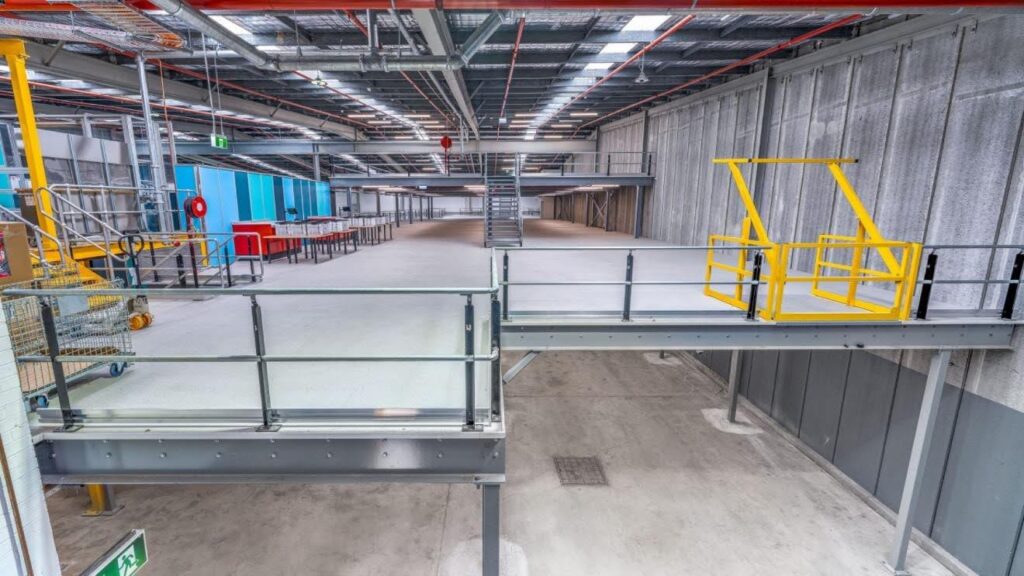
Warehouses are critical to supply chains and business operations, but from a fire safety perspective they present a unique set of challenges. Large, open spaces combined with significant fuel loads and combustible stored goods can allow fires to grow rapidly and reach extremely high temperatures. Unlike offices or residential buildings, warehousing environments often contain high-rack storage systems and limited internal compartmentation, which makes passive fire protection (PFP) a vital part of any fire safety strategy.
Why PFP Is Essential in Warehouse Facilities
In the event of a fire, the primary goals of PFP in warehouses are twofold:
(1) to maintain the structural stability of the building during exposure to high temperatures, and
(2) to protect designated escape routes so that occupants can safely evacuate.
Without appropriate fire-resistant barriers and structural fireproofing, fires can lead to rapid structural collapse, putting lives at risk and causing significant business losses.
Key PFP Measures
- Fire-rated walls separating storage areas.
- Structural steel fireproofing.
- Fire-rated doors on access points.
- Firestopping for penetrations in fire-rated barriers.
Compliance and Standards
All PFP systems installed in warehouses must:
- Be tested to AS 1530.4 (Fire resistance tests of elements of construction), and
- Be installed in accordance with AS 4072.1 (Protection of openings and penetrations through fire-resisting elements).
In addition, structural fire protection must meet the Fire Resistance Level (FRL) requirements set out in the National Construction Code (NCC), which take into account building size, usage and fire load.
Ceasefire PFP’s Approach
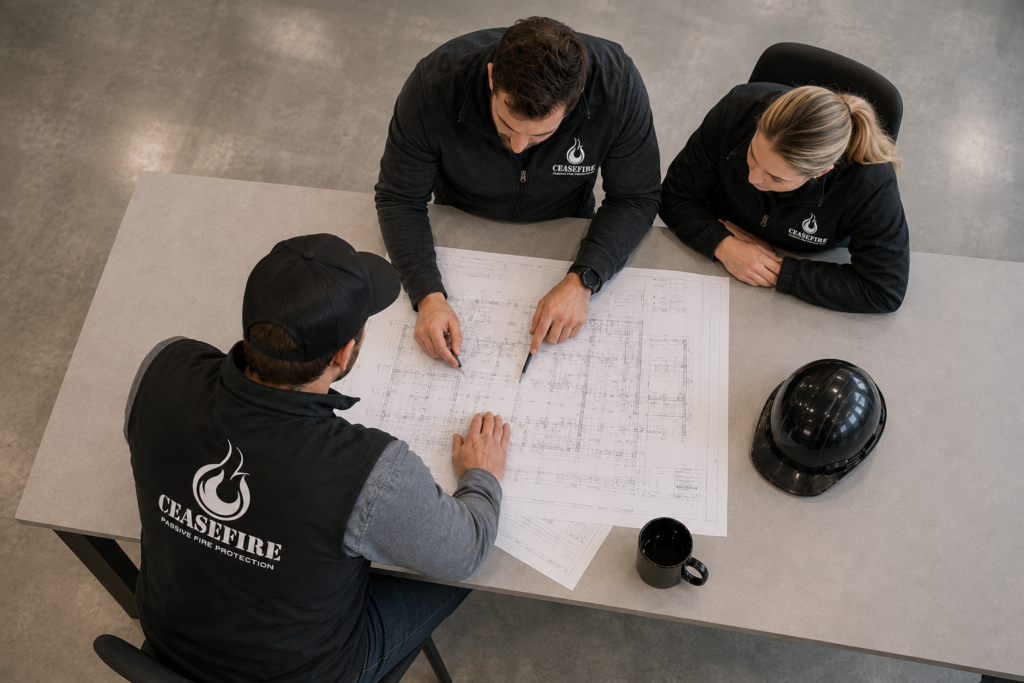
Our team understands that no two warehouses are the same, and that PFP solutions must be tailored to the specific hazards within each facility. To deliver robust and compliant protection, we:
- Conduct detailed fire-risk assessments based on the type and volume of goods stored, layout of the warehouse, and critical pathways for evacuation and firefighting.
- Apply heavy-duty fireproofing systems that are durable and capable of withstanding harsh industrial environments and high thermal exposure.
- Provide comprehensive compliance documentation, including installation records, test certificates and photographic evidence, to support audits and regulatory approval.
Conclusion
Effective passive fire protection is essential to protect both people and property in warehouse environments. By combining risk-based design with certified systems and precise installation practices, Ceasefire PFP ensures that warehouse facilities remain safe, compliant and resilient in the face of fire.