

Heritage buildings present a unique challenge for passive fire protection (PFP). While they must meet the requirements of the National Construction Code (NCC) and Australian Standards, their historical, architectural and cultural value must also be preserved.
The Challenge
Many heritage structures were built long before modern fire safety codes. They often:
- Lack built-in compartmentation
- Contain combustible materials
- Use construction techniques incompatible with modern firestop systems
- Fall under heritage regulations that restrict invasive modifications
Assessment First
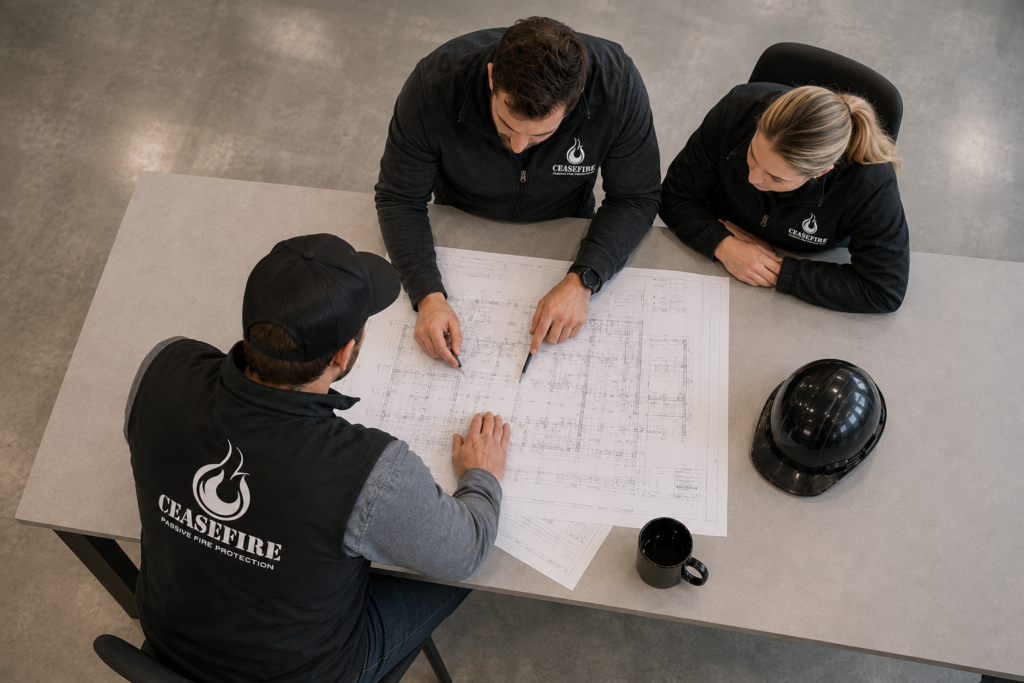
Effective PFP in heritage environments begins with a detailed assessment. Ceasefire PFP works alongside heritage architects, engineers and certifiers to determine:
- Fire risk areas
- Existing fire barriers and their condition
- Opportunities for minimally invasive upgrades
Tailored, Reversible Solutions
Standard firestop systems are rarely appropriate. In heritage projects, Ceasefire specifies solutions that are both compliant and reversible, including:
- Fire-rated boards installed over historic surfaces without penetrating masonry
- Colour-matched intumescent sealants to blend with existing finishes
- Custom-made collars to suit non-standard service sizes and retain fabric integrity
Aesthetics and Compliance
PFP upgrades must be discreet. Firestopping is concealed within service cavities wherever possible, and products are selected to match original textures, colours and detailing. Where fire doors are required, heritage-style doors can be manufactured to comply with AS 1905.1 without compromising appearance.
Documentation & Approvals
Heritage projects usually require council or heritage authority approval. Ceasefire provides all supporting documentation, including:
- Method statements
- Material specifications
- Before-and-after photographs — helping clients secure approvals quickly.
Common Pitfalls in Heritage PFP
- Using incompatible sealants that damage original substrates
- Overlooking hidden voids and cavities
- Installing visually intrusive systems that diminish heritage value
In summary, protecting heritage buildings from fire requires a precise balance between safety and conservation. Ceasefire PFP delivers tailored solutions that meet NCC requirements while preserving the integrity and character of historically significant structures.