

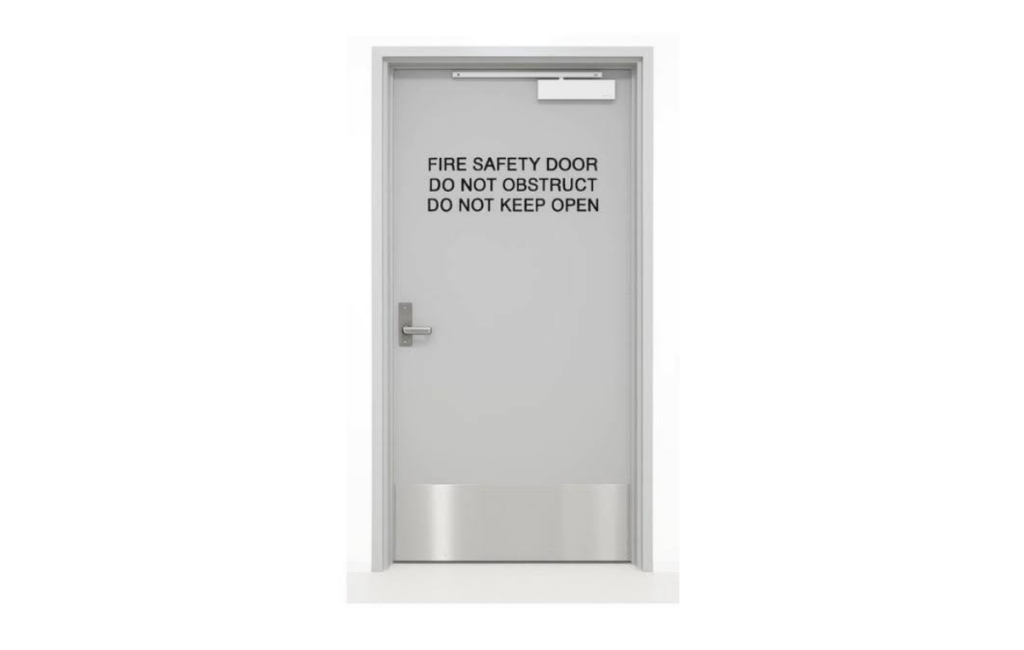
Fire doors are a fundamental part of any passive fire protection (PFP) strategy. When correctly specified, installed and maintained, they help prevent the spread of fire and smoke, while ensuring safe egress for occupants.
What Is a Fire Door?
A fire door is not just the door leaf — it is a complete tested assembly that includes:
- Door leaf
- Frame
- Hardware (hinges, closers, locks)
- Intumescent and smoke seals
- Glazing (if applicable)
Each assembly is tested to AS 1530.4 and assigned a Fire Resistance Level (FRL) or rating (e.g. FD30, FD60, FD120).
How It Works
- Intumescent seals expand in a fire, closing gaps between the leaf and frame
- Smoke seals limit smoke movement in the early stages of a fire
- Combined, they maintain the integrity of the fire compartment and protect escape routes
Regulatory Requirements
Under the NCC, fire doors must comply with AS 1905.1. They are required in:
- Fire-isolated exits (stairwells)
- Fire-rated corridors
- Interfaces between fire compartments
Key Installation Requirements
- Frames must be anchored in accordance with test conditions
- Gaps between frame and wall must be sealed with tested materials
- Hardware must match the approved configuration
- Doors must self-close and latch without obstruction
Maintenance – AS 1851
Fire doors require regular inspection to ensure:
- Seal integrity
- Alignment and closing action
- Hardware functionality
- Glazing integrity (if applicable)
Any damage or alteration must be rectified immediately to maintain compliance.
Ceasefire PFP Services
- Installation of fully compliant fire door assemblies
- Detailed documentation and certification
- Scheduled inspection and maintenance programs
- Rectification of non-compliant doors
Common Issues in Fire Door Compliance
- Repainting over intumescent seals, preventing activation.
- Removing or altering hardware without approval.
- Using non-compliant glazing in fire doors.
- Doors wedged open, compromising their purpose.
Conclusion
Fire doors are a critical safeguard in protecting people and property. With Ceasefire PFP’s expertise in both installation and maintenance, building owners can be confident their fire doors will perform when it matters most.