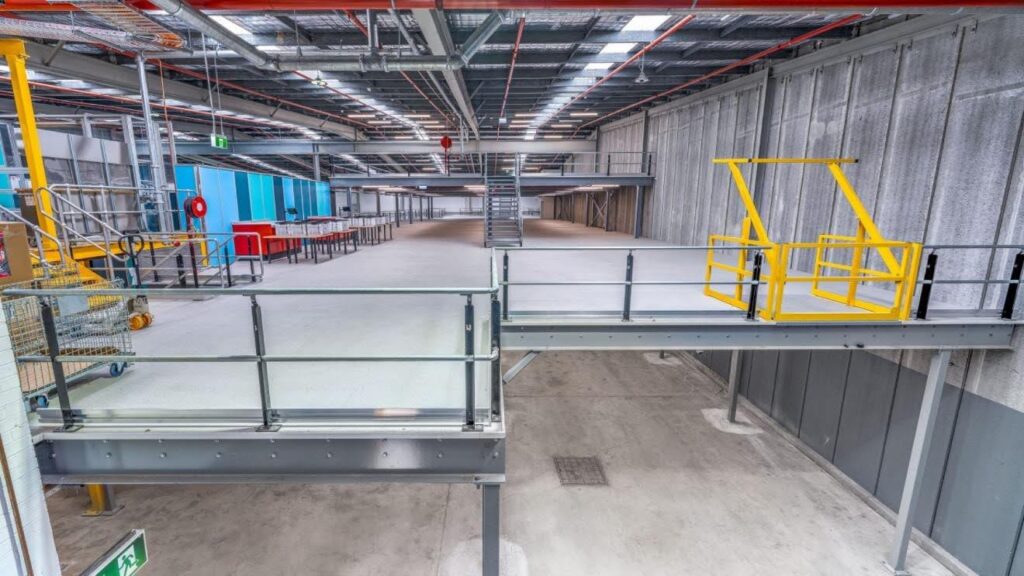


Structural steel provides strength, flexibility and durability — but it rapidly loses load-bearing capacity when exposed to high temperatures. At around 550 °C, steel has already lost approximately 40% of its original strength, which can lead to twisting or collapse within minutes during a fire. Passive fire protection (PFP) is therefore essential to maintain structural integrity and meet the Fire Resistance Level (FRL) required by the NCC..
Why Steel Needs Fire Protection
At around 550°C, most structural steel retains only about 60% of its room-temperature strength. In a severe fire, this temperature can be reached in minutes. Without protection, beams and columns may deform, twist, or collapse. The National Construction Code (NCC) specifies FRL requirements for structural elements based on building class, height, and use.
Fireproofing Methods
There are three main PFP methods for steel:
- Intumescent Coatings
– Applied as a paint-like layer that expands when exposed to high heat.
– Provides a smooth finish suitable for architectural steel.
– Requires precise application thickness to achieve the tested FRL.
– Must be sealed with a protective topcoat to prevent moisture damage. - Vermiculite or Cementitious Sprays
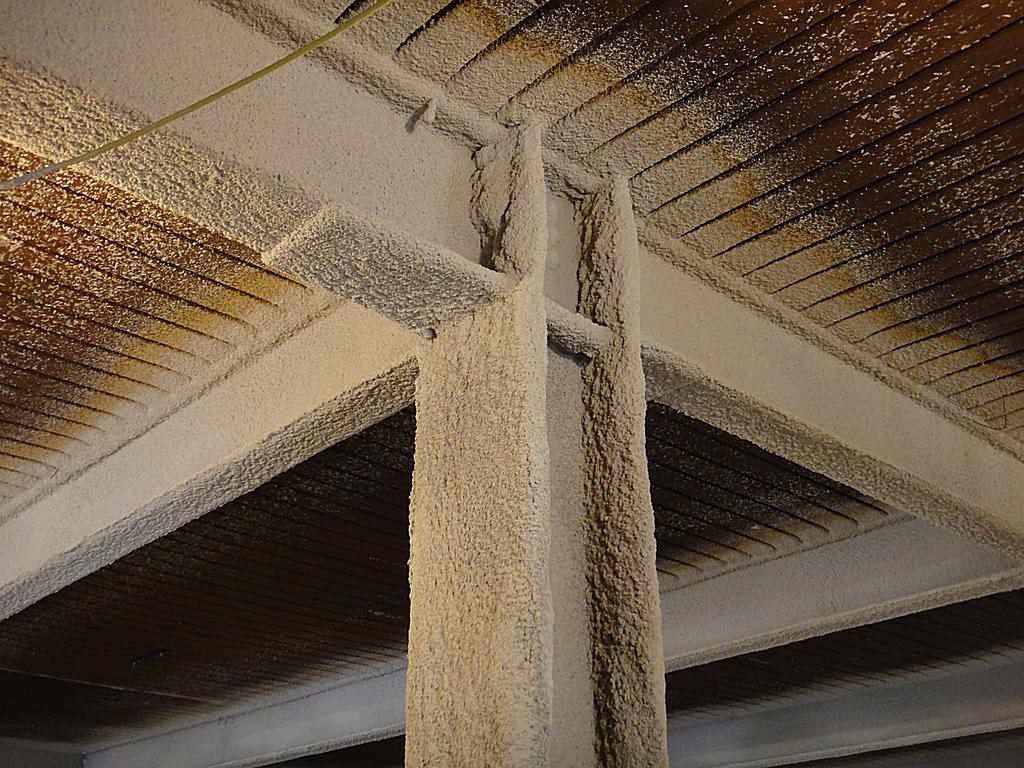
– Sprayed directly onto steel members.
– Economical for concealed structural steel in commercial or industrial settings.
– Offers good thermal insulation but has a rough finish.
– Susceptible to impact damage if not protected. - Fire-Rated Board Systems
– Encases the steel in pre-manufactured boards.
– Provides clean lines suitable for exposed installations.
– Can be removed and replaced for maintenance.
– More expensive than spray-applied methods.
Compliance Requirements
To be compliant, systems must:
- Be tested to AS 1530.4
- Be installed to AS 4072.1 and AS 4100
- Follow the tested configuration, including coating thickness, section size and surface preparation
Ceasefire PFP Approach
Ceasefire tailors fireproofing to each project by:
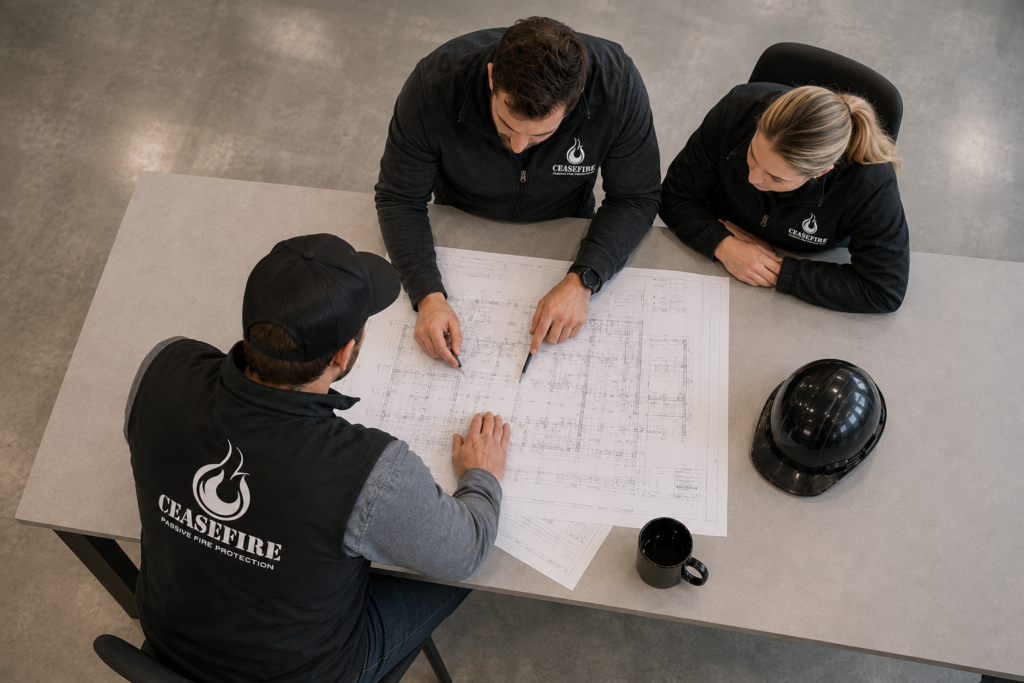
- Reviewing engineering designs and FRL requirements
- Selecting systems proven for the specific steel type and exposure
- Preparing surfaces correctly and applying materials to exact tested thicknesses
- Recording all works with photographs and batch numbers for audit purposes
Common Issues
- Insufficient coating thickness
- Exposure to weather before curing
- Untested or incompatible systems
- Gaps left at penetrations or connections
Ongoing Maintenance
Fireproofing systems must be inspected regularly (AS 1851) to check for impact damage, corrosion or water ingress — all of which can reduce performance.
In summary: Fireproofing is critical to ensuring structural steel performs as intended under fire conditions. Ceasefire PFP delivers tested, durable and fully documented fire protection systems that preserve building stability when it matters most.