

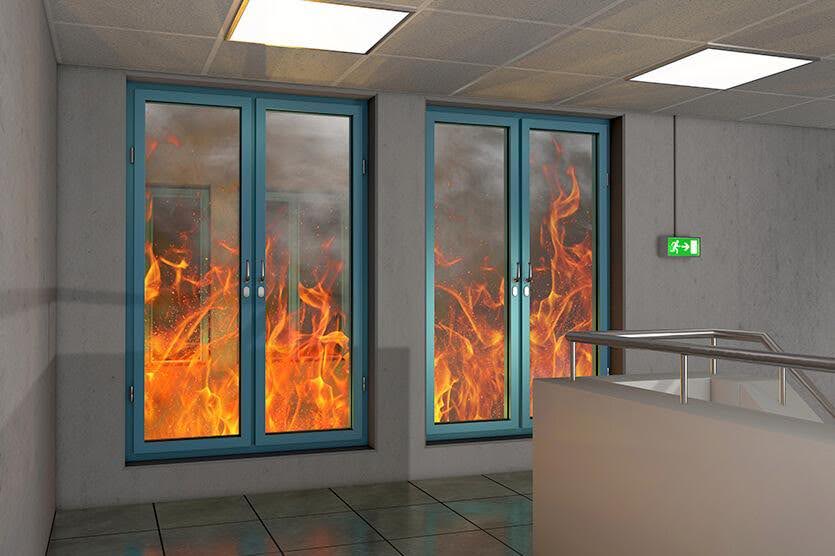
Fire-resistant glazing allows modern buildings to maintain light, openness and visibility without compromising fire compartmentation. Unlike standard glass—which fails rapidly under heat—fire-resistant glazing is engineered to maintain integrity (and, in some cases, insulation) for a specified Fire Resistance Level (FRL).
Why It Matters
Open-plan architecture and extensive use of glass create new fire safety challenges. Fire-resistant glazing offers a solution by retaining visibility while ensuring that flames, smoke and heat are contained within designated fire compartments.
Types of Fire-Resistant Glazing
- Integrity-Only Glass (E)
– Prevents flames and hot gases from passing through for the rated period.
– Does not prevent heat transfer.
– Suitable for areas where radiant heat is not a risk to occupants. - Integrity and Insulation Glass (EI)
– Prevents both flame passage and excessive heat transfer.
– Contains multiple layers with interlayers or gels that foam up under heat.
– Suitable for escape routes and areas with high occupant density. - Radiation Control Glass (EW)
– Limits radiant heat to a defined level.– Often used where partial thermal protection is required.
How It Works
Fire-resistant glass may be toughened, laminated or ceramic. In multi-layer systems, intumescent interlayers activate when heated and expand to form an opaque, insulating barrier. This maintains compartment integrity while improving safety during evacuation and firefighting.
Frames and Installation
The entire glazing assembly (glass + frame + seals) must be tested to AS 1530.4.
Frames are typically steel, aluminium or fire-treated timber, and must match the tested configuration in both size and fixing method.
Compliance Requirements
To be NCC-compliant, fire-resistant glazing systems must:
- Hold a valid AS 1530.4 test report
- Be installed in accordance with AS 4072.1
- Match the tested frame/seal configuration
- Maintain the required FRL of the barrier
Ceasefire PFP’s Approach
- Coordinate with architects to preserve design intent
- Select glazing systems with verified test data
- Ensure frames and seals match the tested assembly
- Provide full documentation, including photos and batch numbers
Common Issues and Failures
- Using non-tested frames or seals.
- Replacing fire-rated glass with standard glazing after occupancy.
- Damaged seals that compromise performance.
- Installing glass larger than the tested maximum size.
Conclusion
Fire-resistant glazing allows architects to blend transparency and safety, offering light-filled spaces without compromising fire protection. With Ceasefire PFP’s tested systems and meticulous installation, buildings can meet both aesthetic and compliance goals.