

AS 1530.4 is the Australian Standard that underpins the fire resistance testing of building materials, systems, and components. If you’re involved in passive fire protection—whether as a designer, installer, or certifier—understanding this standard is essential. It defines the fire testing procedures that determine a system’s Fire Resistance Level (FRL), which is a critical component of code compliance in the NCC.
The standard outlines how building elements are tested in a controlled furnace. During the test, specimens are exposed to a prescribed time–temperature curve, and their performance is monitored to evaluate their ability to:
- Maintain structural integrity,
- Prevent the passage of flame, and
- Limit heat transfer.
The outcome is expressed as an FRL triplet:
Structural Adequacy / Integrity / Insulation. For example, a rating of 120/60/60 means:
- 120 minutes structural performance,
- 60 minutes resistance to flame penetration, and
- 60 minutes insulation from heat transfer.
At Ceasefire PFP, selection of firestopping systems is always tied directly to an AS 1530.4 test report. We do not mix components or use substitute products — every system is installed in the same configuration in which it was tested: same service type, substrate, orientation, and gap size.
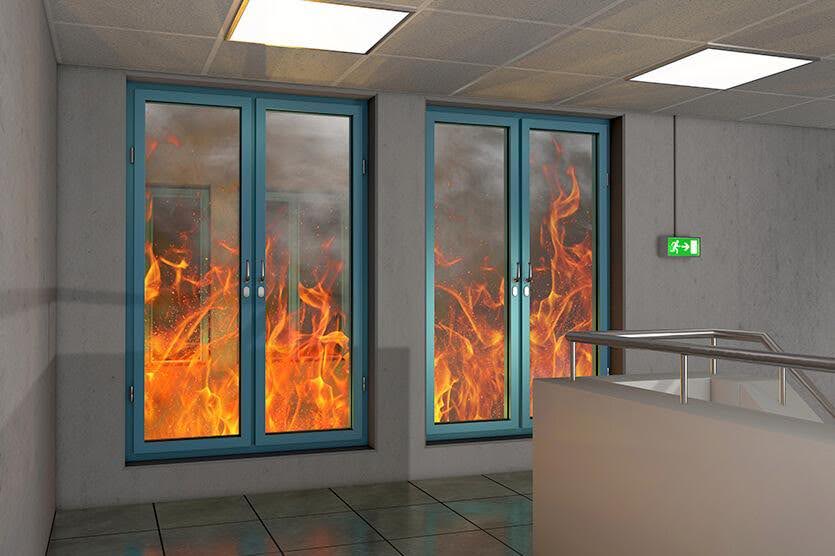
Fire resistance tests simulate real-world fire exposure, and conditions include:
– Temperature rise up to 1000°C over 2 hours
– Pressure differentials to simulate smoke movement
– Thermocouples measuring heat on the unexposed face
– Load-bearing support for structural tests
Only systems that pass the test criteria without failure at the required time are granted an FRL rating. If a product fails early (e.g. insulation breach at 40 mins), it is only certified to that value. Installers cannot claim a higher rating based on assumptions or manufacturer claims not backed by test results.
Importantly, AS 1530.4 does not test individual materials in isolation. It tests full systems in a controlled setup. That’s why mixing components across brands—like a Trafalgar board with a BOSS collar—invalidates the rating unless a composite test exists.
At Ceasefire, we maintain a digital library of test reports and installation manuals. Every installed system is verified against the correct documentation, and a reference is included in our handover packs.
AS 1530.4 also enables approvals for multiple configurations:
– Floor vs wall penetrations
– Horizontal vs vertical pipe entry
– Mixed service penetrations
So when a builder asks, “Can this collar be used on a 150 mm pipe in a 200 mm slab?”, our team can answer confidently — because we have the test data to support it.
In conclusion, AS 1530.4 is more than a test—it’s the foundation of trustworthy passive fire design. If your system isn’t tested to it, you can’t claim compliance. That’s why Ceasefire PFP builds every scope, installation, and inspection around proven fire resistance testing principles.